
Data Center Solutions
Stabilizing the Megawatt Heartbeat: The Essential Transient Buffer for AI Factories
Overview
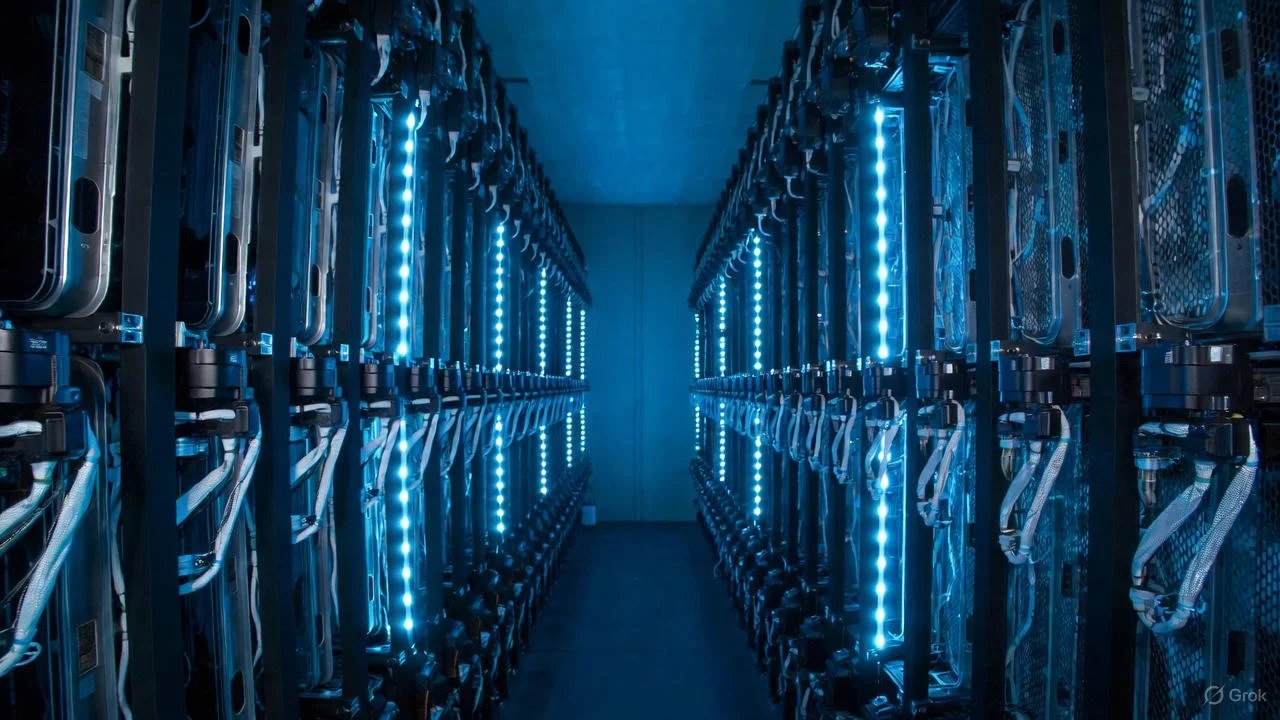
The global data center landscape is undergoing a structural transformation into high-density "AI Factories" designed for large-scale model training. As GPU clusters scale toward megawatt-class racks, traditional power infrastructure is shifting toward a native 800Vdc architecture to overcome physical limits and reduce energy loss. STC’s Asymmetric Hybrid Supercapacitor (AHSC) technology is the critical link in this new ecosystem, serving as an active transient buffer that handles the extreme workload volatility and voltage stability challenges that traditional batteries cannot manage
Core Applications
Vdroop Mitigation and Voltage Stability
Massive GPU clusters operate synchronously, causing power demand to spike from 30% to 100% utilization in milliseconds. AHSC modules supply instantaneous peak current to prevent "Vdroop"—a transient voltage drop that can lead to performance throttling or system crashes—ensuring the compute rack remains stable during intense AI training cycles
Load Peak Shaving and Infrastructure Optimization
By acting as a low-pass filter, AHSC decouples the chaotic power demand of GPUs from the utility grid. It absorbs energy during idle periods and releases it during peaks, allowing electrical components like transformers and breakers to be sized for average loads rather than peak current, significantly reducing the facility's footprint and CAPEX
Multi-Timescale Resilient UPS Bridging
In 800Vdc architectures, AHSC handles the high-frequency surges and dips in the millisecond range, while Lithium batteries provide the "bridge" power needed for backup generators to start. This layered approach creates a resilient power chain capable of managing everything from a millisecond GPU spike to a utility outage
Reliable Backup Generator Startup
Data centers rely on large diesel generators that require massive instantaneous currents for successful starting. AHSC modules deliver ultra-high current pulses (e.g., 1000A) with 100% reliability even in extreme temperatures, ensuring emergency power is available without the frequent maintenance or failure risks associated with lead-acid starting batteries
The STC AHSC Technical Edge
Features
High Power & High Energy
High C-Rate Discharge
Millisecond Response
100,000+ Cycle Life
Benefit for Smart Grids
Delivers massive burst power from a small footprint, allowing for higher server density in the data hall.
Capable of full-power discharge in seconds, perfectly matching the emergency transition profile of modern UPS systems.
Zero-latency activation ensures that even the most sensitive AI chips and servers never experience a voltage drop.
Lasts 15–20 years—matching the facility's lifespan and eliminating the 3–5 year replacement cycle of traditional batteries.
Call to Action
Secure Your Data with Zero-Downtime Intelligence. Don't let power instability compromise your digital assets. Partner with STC to implement the next generation of data center power protection.
Typical Project Scenario
Ultra-Fast Power Compensation for High-Density GPU Clusters
Project Overview: AI Power Spikes & Computing Interruptions
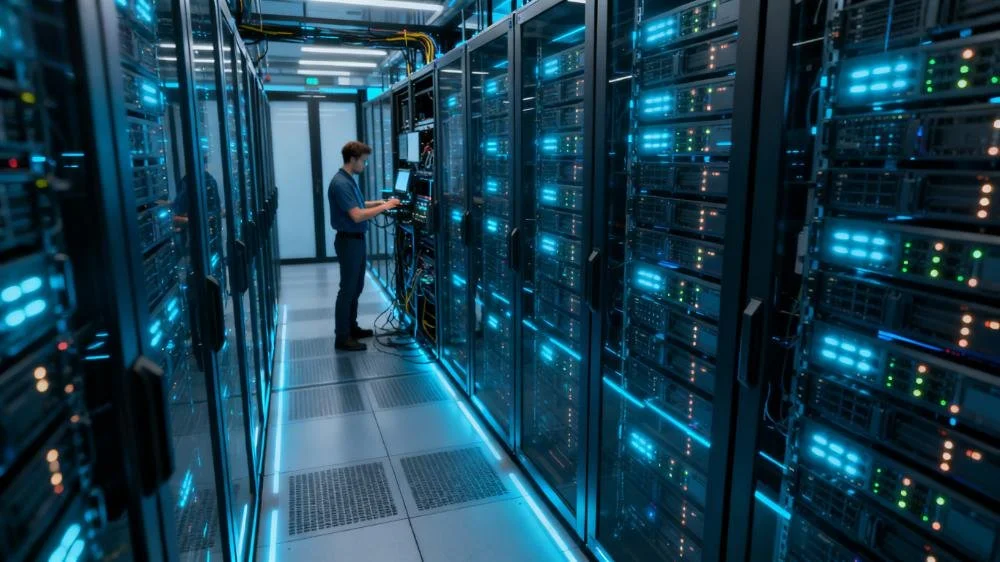
A leading AI Data Center in Guangdong, dedicated to large-scale deep learning and inference tasks, faced a critical power challenge. During intensive parallel computing, GPU clusters generated violent, millisecond-level power fluctuations. Traditional UPS systems, with their inherent lag in response time, struggled to keep pace with these sudden spikes, leading to frequent voltage sags. This instability posed a high risk of hardware damage and, more importantly, interrupted mission-critical AI training sessions, resulting in significant data and financial losses.
The STC Solution: Multi-Layered Power Defense
To safeguard the center’s computing integrity, STC implemented a collaborative power strategy combining Supercapacitor Modules with traditional energy storage.
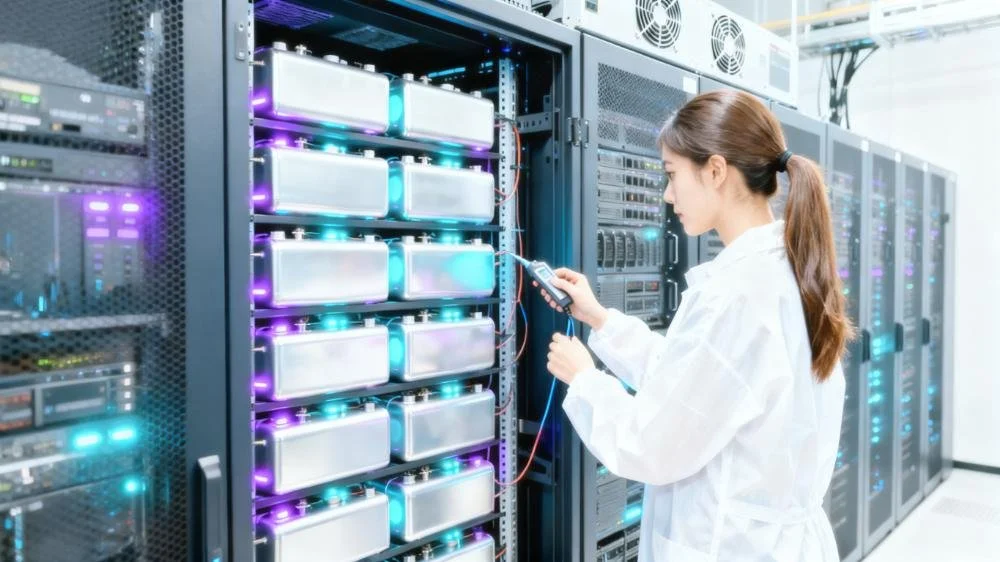
STC’s supercapacitors became the core buffer unit for voltage stability. Utilizing their <5ms ultra-fast response, the modules act as a shock absorber for the power grid. When AI chips trigger a massive current overload within a single millisecond, the supercapacitors discharge instantaneous high power within 0.1 seconds, smoothing the voltage curve before the spike can impact the hardware.
Technical Synergy & Strategic Benefits
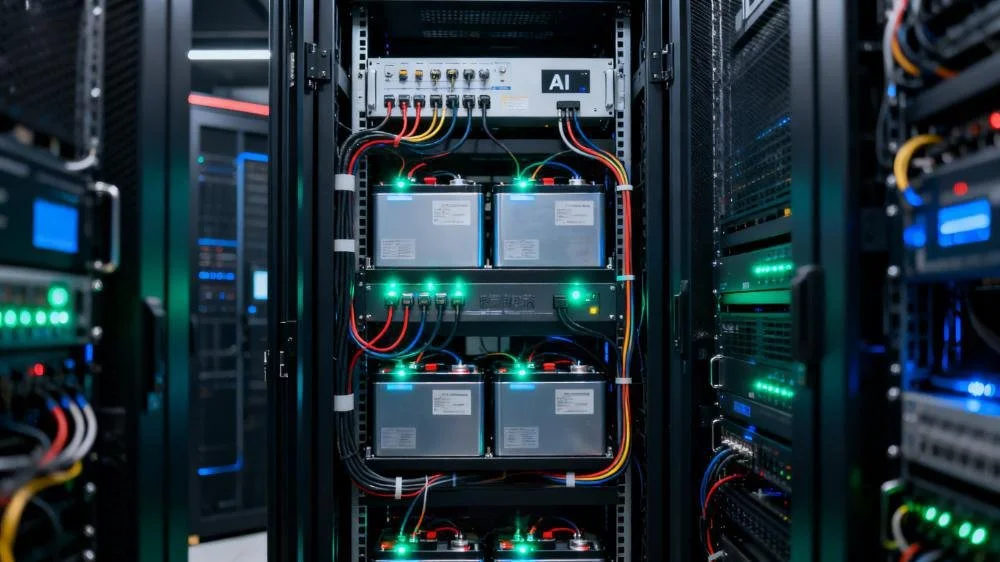
The system operates on a sophisticated Layered Response Mechanism:
Layer 1 (Supercapacitors): Handle 1-50ms instantaneous power compensation to absorb sudden load shocks.
Layer 2 (Backup Power/UPS): Provides sustained power for interruptions lasting seconds or longer, allowing for safe system transitions.
Key Performance Metrics:
Voltage Stability: Reduced voltage fluctuations by 80%.
Computing Efficiency: Optimized energy consumption per unit of computing power by 33%.
Space Optimization: The compact footprint of supercapacitors increased cabinet space utilization by 50%, ideal for high-density AI deployments.
Reliability: The 1,000,000+ cycle life ensures the system handles high-frequency fluctuations daily without the need for frequent maintenance or replacement.
Conclusion: Empowering the Future of AI
By implementing STC’s supercapacitor technology, the data center has virtually eliminated downtime risks associated with power instability. This project serves as a technical benchmark for the global AI industry, proving that advanced energy storage is no longer just "backup"—it is a vital component of high-performance computing stability.