
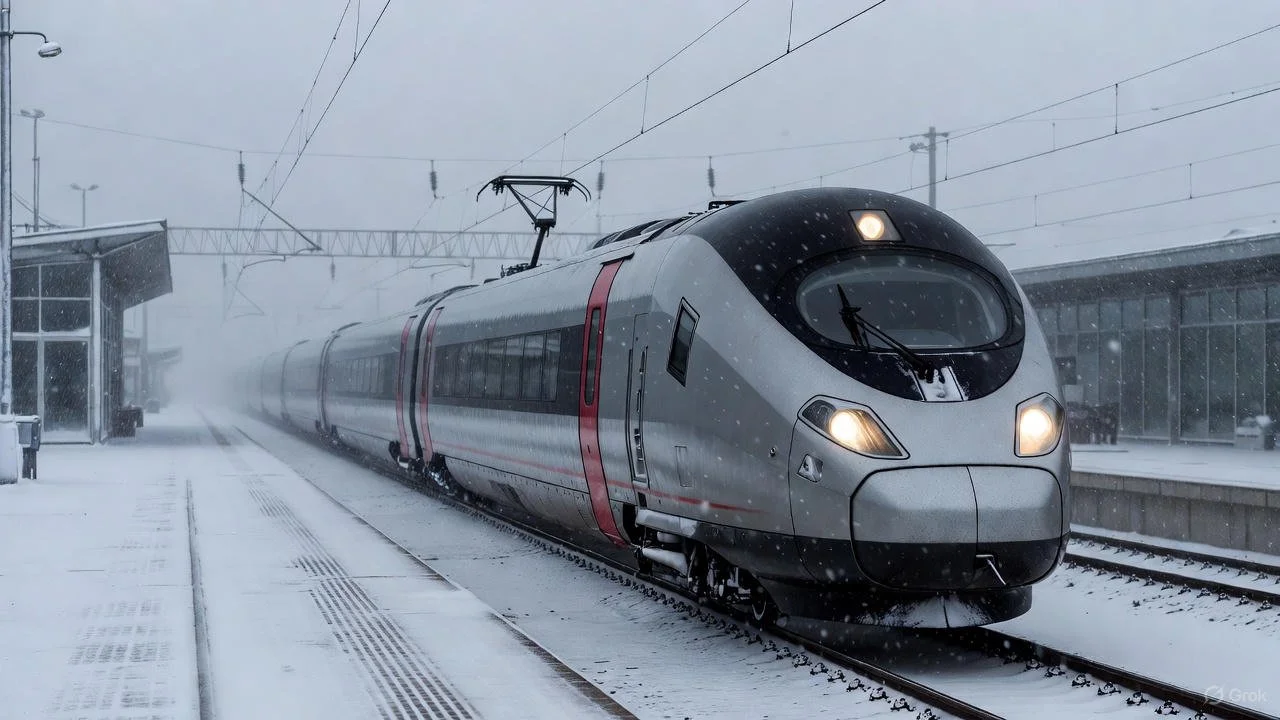
Rail Transit & EV Solutions
Kinetic Efficiency for a Greener World in Motion
Overview
In the fast-paced world of urban transit and electric mobility, every stop and start is an opportunity to save energy. Supercapacitor technology excels where traditional batteries falter: in high-frequency, high-current environments. By capturing braking energy and providing massive power bursts for acceleration, our solutions are driving the next generation of energy-efficient trains, electric vehicles (EVs), and two-wheelers, making modern transportation more sustainable and cost-effective.
Core Applications
Rail Transit Energy Recuperation
Subways and light rails stop and start hundreds of times a day. STC systems capture the massive kinetic energy generated during braking—which is normally lost as heat—and store it to power the next acceleration or stabilize the station’s grid. This reduces overall energy consumption by up to 30%.
Electric Vehicles & Start-Stop Systems
For EVs and hybrid vehicles, our supercapacitors handle the high-current demands of rapid acceleration and regenerative braking. This reduces the "stress" on the main lithium battery, extending its lifespan and improving vehicle performance in extreme cold.
Electric Two-Wheelers & Micromobility
Providing instant power for steep climbs and rapid charging capabilities for urban commuters. STC’s technology ensures that lightweight electric transit is not just convenient, but durable and fast-charging.
Catenary-Free Operation
Enabling trains to run between stations without unsightly overhead wires. STC supercapacitors can be flash-charged at each stop in seconds, providing enough power to reach the next station.
The STC AHSC Technical Edge
Features
High Power & High Energy
High C-Rate Discharge
Millisecond Response
100,000+ Cycle Life
Benefit for Smart Grids
Provides the massive surge current required for heavy train startup while maintaining a compact, lightweight profile for vehicle integration.
Absorbs high-current braking energy in seconds, ensuring no regenerative power is wasted during rapid stops.
Seamlessly transitions between braking and traction modes, providing a smooth and efficient ride experience for passengers.
Built to withstand the rigors of 24/7 urban transit, outlasting the vehicle’s service life without the need for battery replacements.
Call to Action
Accelerate Toward a Zero-Emission Future Optimize your transit fleet with the world’s most durable energy storage technology. Let our team design a custom recuperation system for your mobility needs.
Typical Project Scenario
China’s First Fully Autonomous Supercapacitor Tram
Project Overview: Revolutionizing Urban Transit with 30-Second "Flash Charging"
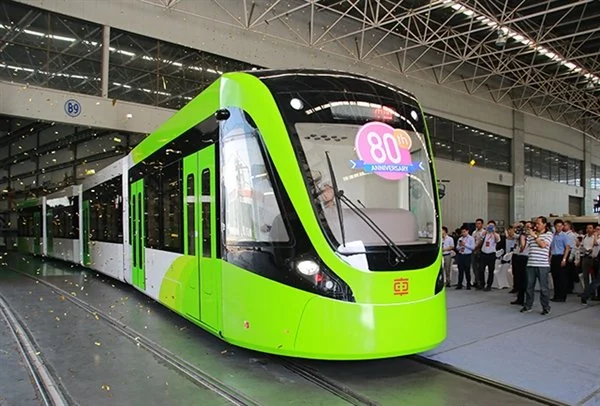
On August 1, 2021, China’s first fully autonomous supercapacitor-powered tram officially rolled off the production line. This pioneering vehicle represents a massive leap in public transportation, moving away from unsightly and expensive overhead wires (catenaries) toward a cleaner, more efficient, and flexible urban infrastructure.
The Technology: 9,500 Farad Ultra-Storage
The project, specifically implemented on Guangzhou Huangpu Tram Line 1, features the nation's largest 9,500 Farad supercapacitor storage system. This high-capacity energy bank allows the tram to navigate its entire 14.4 km route without any external power lines.
Key Technical Specifications:
Rapid "Flash Charging": The system supports ultra-fast charging at station stops, fully replenishing enough power for the next leg of the journey in just 30 seconds.
Operational Range: A single 30-second charge provides a driving range of 3 to 5 kilometers, perfectly matching the distance between urban transit stations.
Hybrid Safety: The tram is equipped with Lithium Titanate (LTO) batteries as an auxiliary emergency power source, ensuring passenger safety and operational continuity in all conditions.
Efficiency & Environmental Impact
Beyond the visual benefit of removing overhead wires, the supercapacitor system delivers industry-leading energy efficiency:
Superior Recuperation: The system captures and recycles over 85% of kinetic energy during braking, significantly reducing the total electricity demand of the transit line.
Grid Harmony: By spreading the energy demand across multiple "micro-charges" at stations, the system reduces the peak load pressure on the city’s central power grid.
Zero Emissions: As a 100% electric solution, it contributes to the "Dual Carbon" goals by eliminating direct emissions in high-density residential areas.
Conclusion: A Blueprint for Modern Cities
The Guangzhou Huangpu project proves that supercapacitor technology is no longer just a laboratory concept but a robust, industrial-scale solution for high-frequency urban transit. It offers city planners a way to implement light rail systems with lower infrastructure costs, faster construction times, and superior energy aesthetics.